How data improves delivery decisions
The best delivery operations are built on data, not instinct. This piece explains which data points matter most and how to use them to make better decisions.

Yasmin Cohen
2
min read
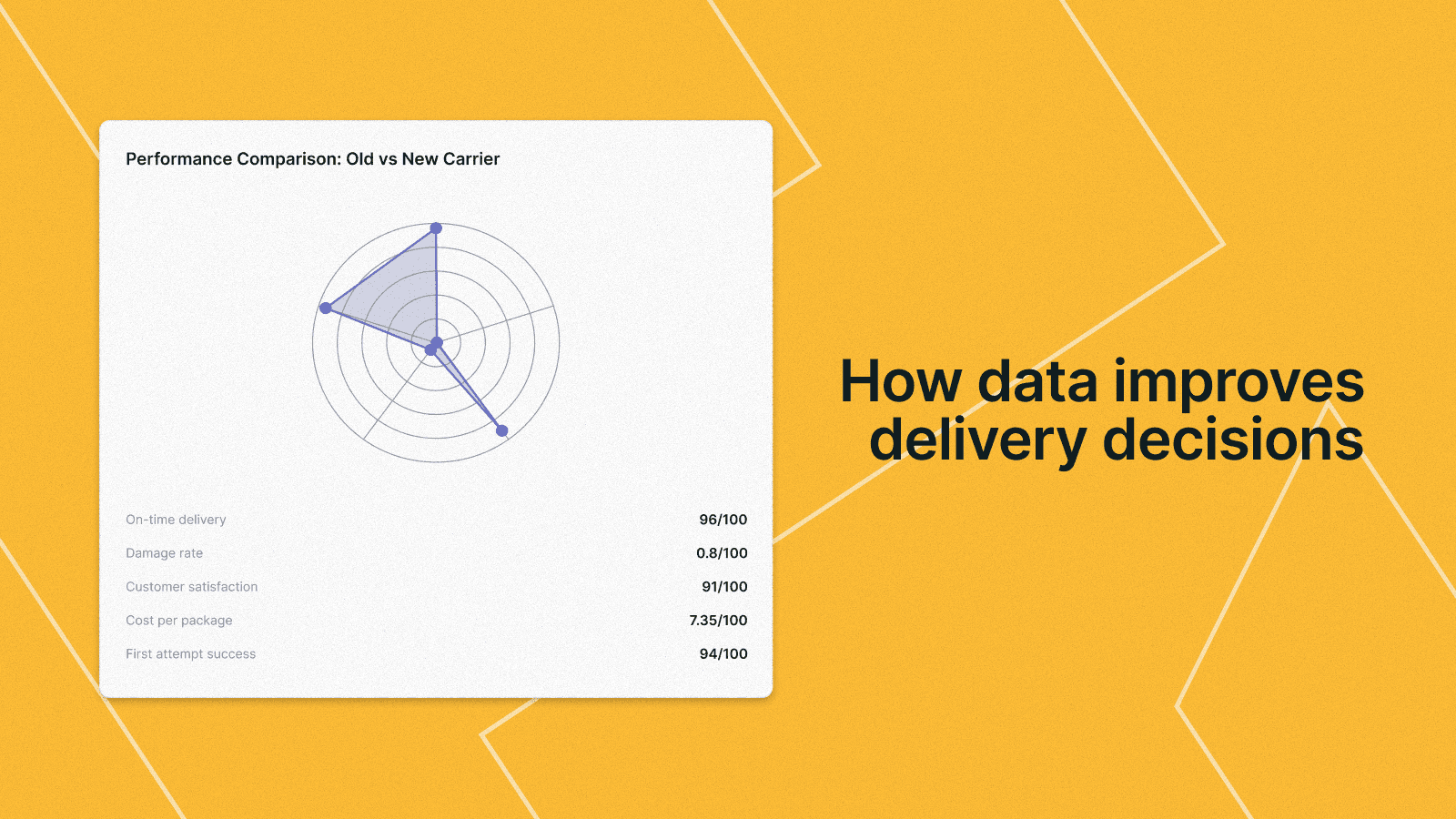
Most ecommerce brands are sitting on a huge volume of delivery data. Tracking events, carrier reports, customer contacts, return rates and performance dashboards generate a constant stream of information. The challenge is rarely access to data. It’s knowing which metrics actually matter, how to interpret them, and what actions they should drive.
The brands that use delivery data effectively don’t just measure performance. They use it to identify problems earlier, make better operational decisions and continuously improve the customer experience.
Why delivery data matters
Delivery is one of the few parts of an ecommerce business where problems compound silently. A carrier’s on-time rate might look acceptable in aggregate, but hides a pattern of failures in a specific postcode, on a specific day, or for a specific product type. Without the right data, those patterns stay invisible until customers start leaving.
Delivery problems rarely appear evenly across an operation. A carrier’s overall performance might appear acceptable while masking repeated problems in a particular region, delivery window, or product category. Good data helps surface those patterns early, before they become customer complaints.
That’s what makes delivery data valuable. It turns assumptions into evidence and gives operators a clearer understanding of where to focus their attention.
The metrics that matter most
No single metric tells the whole story. Strong delivery operations look at these measures together. A carrier may have a competitive rate but generate high claims volumes. Another may achieve excellent delivery success rates but drive unnecessary costs. The value comes from understanding the trade-offs between cost, reliability and customer experience rather than optimising a single number in isolation.
On-time attempted delivery rate
This is the most fundamental delivery metric. It measures the percentage of parcels where a delivery attempt was made within the promised window. The industry average sits around 88–92%. If your carrier is consistently below that, it is costing you customer satisfaction and repeat purchases.
First-attempt success rate
A failed first attempt is not only an operational inconvenience, but a customer experience failure. Every redelivery adds cost and friction. Tracking first-attempt success by carrier, region and time of year helps surface where failures are concentrated and why.
WISMO rate
WISMO stands for “where is my order” and measures the volume of customer contacts generated by delivery uncertainty. A high WISMO rate is often a sign that your tracking and communication are not doing their job. Reducing it saves your support team time and simultaneously improves the customer experience.
Claims rate
Claims cover lost, damaged and delayed parcels that result in a formal complaint or compensation request. A claims rate above 0.5% warrants investigation. Below 0.1% is industry-leading. Tracking this over time, and by carrier, helps identify reliability issues before they become larger operational challenges.
Cost per successful delivery
This is different from your headline carrier rate. It accounts for redeliveries, failed attempts, claims handling and customer service contacts generated by delivery issues. Brands that focus solely on their contracted parcel rate often underestimate the true delivery cost. Looking at cost per successful delivery gives a more accurate picture of what the operation is actually costing the business.
Net Promoter Score and post-delivery feedback
Customer sentiment after delivery is one of the most direct signals available. A low post-delivery NPS, or a pattern of negative feedback specifically referencing delivery, is a strong indicator that carrier performance is damaging brand perception.
How to use the data
Collecting metrics is the easy part. The harder part is building a regular review cadence that connects the data to decisions.
A monthly delivery review should cover on-time performance by carrier and region, WISMO and claims rates compared with the previous period, and any patterns in customer feedback related to delivery.
The purpose of delivery reporting is not to create dashboards. It is to drive decisions. Every review should end with a small number of clear actions, whether that’s challenging carrier performance in a specific region, improving customer communications or adjusting carrier allocation.
If you use multiple carriers, data can also serve as a basis for well-informed carrier selection. Rather than choosing on price alone, you can compare carriers on first-attempt success rate, claims rate and customer satisfaction, and route volume accordingly.
What good delivery data infrastructure looks like
To do this well, you need delivery data to flow into a single place rather than being scattered across multiple carrier portals. A delivery management platform aggregates tracking, performance and claims data across carriers, making it easier to observe patterns and benchmark performance over time.
The brands that use delivery data most effectively treat it the same way they treat sales or marketing data: as a live input to operational decisions, not a retrospective report.
The bottom line
Delivery data doesn’t improve performance on its own. Its value comes from helping teams make better decisions.
The strongest delivery operations use data to identify problems earlier, prioritise improvements and hold partners accountable. They understand where costs are coming from, where customers are experiencing friction and where performance is drifting before those issues become visible elsewhere in the business.
The goal isn’t to collect more data. It’s to create a clear link between insight and action.
HIVED provides real-time delivery visibility and performance data to every brand on the network. If you want cleaner data and more reliable delivery, talk to the HIVED team today.



" height="18px" id="WXhVeA1oH" transform="translate(4.16 3)" width="15.680039999999998px"/></svg>)
" height="18px" id="B9Ck5Ljyr" transform="translate(3 3)" width="18px"/></svg>)
" height="18px" id="v2_jQqFYe" transform="translate(3 3)" width="18px"/></svg>)