How carrier pricing actually works
If you've ever been surprised by a delivery invoice, you're not alone. Carrier pricing is one of the most misunderstood areas of last-mile logistics. On the surface, it can look straightforward, but delivery costs are built from multiple layers, and the gap between what's advertised and what you actually pay can be considerable.

Yasmin Cohen
0
min read
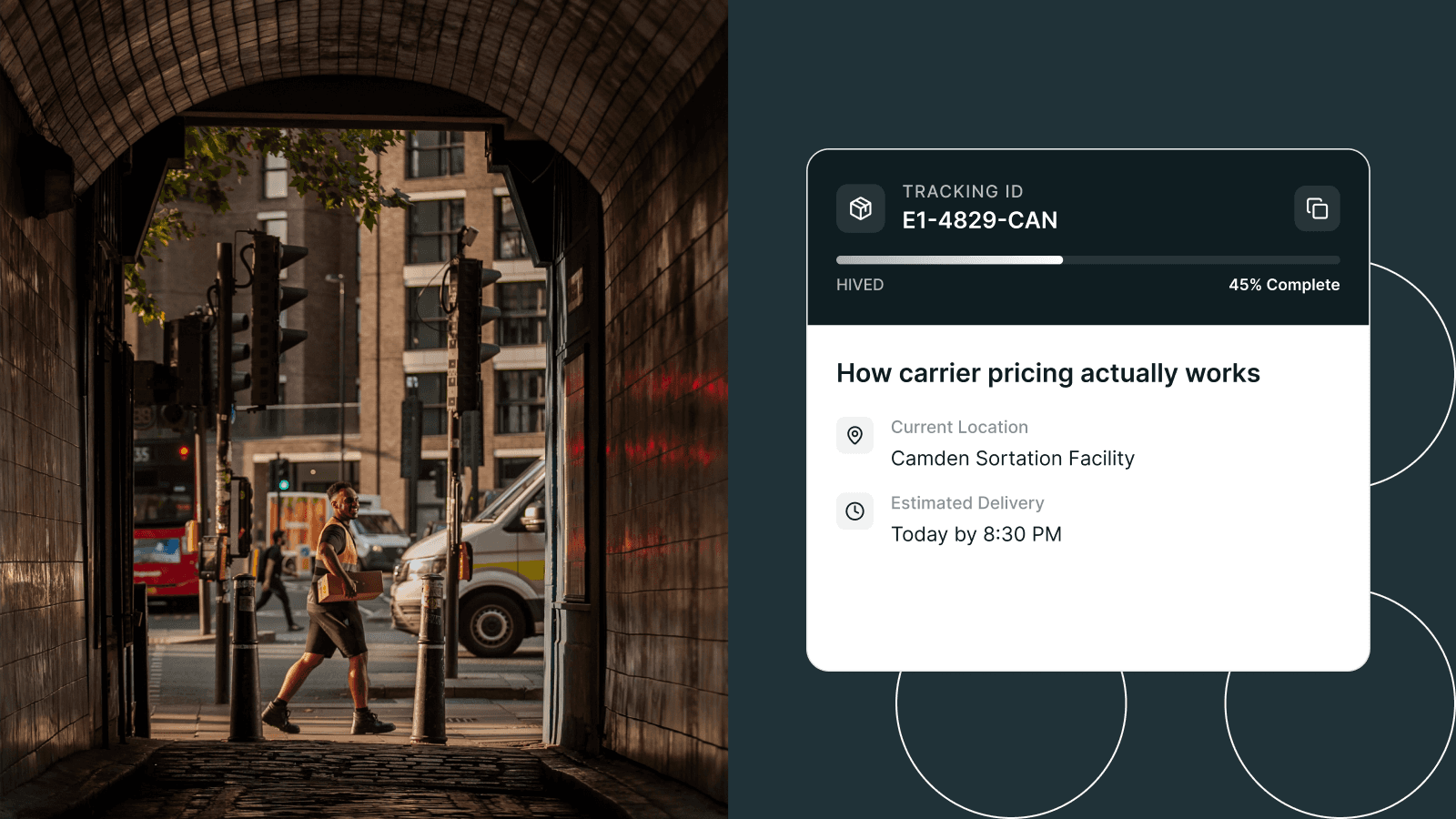
How carrier pricing actually works
If you've ever been surprised by a delivery invoice, you're not alone.
Carrier pricing is one of the most misunderstood areas of last-mile logistics. On the surface, it can look straightforward, but delivery costs are built from multiple layers, and the gap between what's advertised and what you actually pay can be considerable.
Most retailers only discover this after going live. By that point, contracts are signed, integrations are built, and switching providers is disruptive. What looked like a competitive rate starts to look very different once fuel surcharges, peak premiums, and failed delivery fees begin to stack up.
Understanding how carrier pricing really works gives you a stronger foundation to negotiate from, protects your margins, and helps you avoid the surprises that catch so many retailers off guard.
Choosing the right delivery pricing model for your business
Before selecting a pricing model, it is key to understand the main structures available and how each affects your costs as your delivery contract structure can significantly impact costs.
Before selecting a pricing model, it is key to understand the main structures available and how each affects your costs.
1. Per-parcel pricing
Applies a fixed rate to each parcel. It is easy to budget for and suits lower or unpredictable volumes, but costs increase with volume, reducing margins during peak periods.
2. Per-route pricing
Charges by delivery route rather than by parcel. Within densely populated areas, it can be more cost-effective to cover multiple stops with a single charge, offering greater predictability as your business grows.
No single model fits every situation as the optimal choice will depend on order density, delivery locations and volume consistency. Choosing incorrectly could potentially raise long-term costs.
Hidden fees in carrier contracts: what to look for
The headline rate rarely reflects the total cost. Most contracts include extra charges that are often missed when comparing base rates alone. Common hidden fees include:
Failed delivery charges are applied when a delivery attempt is unsuccessful.
Address correction fees are triggered when a customer-provided address needs to be amended.
Oversized or overweight surcharges are applied to parcels outside standard dimensions.
Weekend or time-slot premiums added for deliveries outside standard operating hours.
Individually, these fees may seem minor, but they accumulate with each delivery. Before signing, request a complete fee schedule and compare it against realistic order scenarios. Key takeaway: Always account for all possible fees when projecting delivery costs.
Fuel surcharges: why your delivery costs keep changing
Even if your contract rate remains unchanged, your actual costs may vary. This is because fuel surcharges are added to the base delivery rate to reflect changes in fuel prices. They are typically calculated as a percentage of the base rate and reviewed regularly, often monthly, based on market conditions.
Fuel surcharges are standard in the industry, but calculation methods and timing vary. Some carriers use published indexes, while others set their own rates with less transparency.An example is HIVED, which operates a 100% electric fleet, meaning it isn’t exposed to fuel price fluctuations in the same way, so fuel surcharges don’t play the same role in pricing.
Fuel surcharges can lead to unpredictable costs for retailers. Therefore, when comparing carriers, ask how fuel surcharges are calculated and how often they change.
Peak surcharges: planning for your most expensive deliveries
The times when delivery demand is highest are often the most expensive periods for shipping.
Peak surcharges are applied during high-demand periods, especially before major shopping events and holidays. Carriers use these fees to cover increased operational costs and capacity constraints.
Overlooking peak surcharges during planning can reduce delivery margins. A rate that appears favourable in October may not be as competitive in December.
When reviewing contracts, ask when peak surcharges apply, what notice is required, and how they are calculated. Use this information to plan pricing and promotions ahead of peak periods.
Minimum volume commitments: understanding the risk
Some contracts require minimum-volume commitments, meaning you agree to send a specified number of parcels within a set period.
These commitments provide carriers with predictability but transfer risk to you. If you miss targets due to slow sales or inaccurate forecasts, you are still billed for the shortfall.
Before agreeing, stress-test your forecasts and consider potential downside scenarios. Assess whether the pricing benefits justify the risk. Flexible contract terms, such as options to adjust volume commitments, renegotiate rates, or opt out with reasonable notice, allow you to better adapt to changes in demand and uncertainty.
How to evaluate the true cost of delivery
Base rates matter, but are only part of total costs. When comparing carriers, calculate total costs, including base rates, fuel and peak surcharges, hidden fees, and potential shortfall charges.
Use realistic order data for accuracy. the most cost-effective. Transparency, pricing stability, and contract flexibility often outweigh headline numbers. To make informed decisions, review the full pricing structure: base rates, hidden fees, surcharges, commitments, and flexibility.
Understanding total costs enables better negotiations and avoids surprises.
Get a clearer view of delivery pricing with no hidden surprises 👉 ship with HIVED



CAREERS
Shape the future of logistics
We are hiring across our business. Get in touch today to see if HIVED could be the right fit for you.

" height="18px" id="WXhVeA1oH" transform="translate(4.16 3)" width="15.680039999999998px"/></svg>)
" height="18px" id="B9Ck5Ljyr" transform="translate(3 3)" width="18px"/></svg>)
" height="18px" id="v2_jQqFYe" transform="translate(3 3)" width="18px"/></svg>)