How to prepare delivery ops for peak season
Peak season is the most unforgiving test of an ecommerce delivery operation. Volume spikes, carrier networks run at capacity, customer expectations are higher because purchases are often time-sensitive gifts, and the margin for error compresses at exactly the moment when the consequences of getting it wrong are greatest.

Yasmin Cohen
0
min read
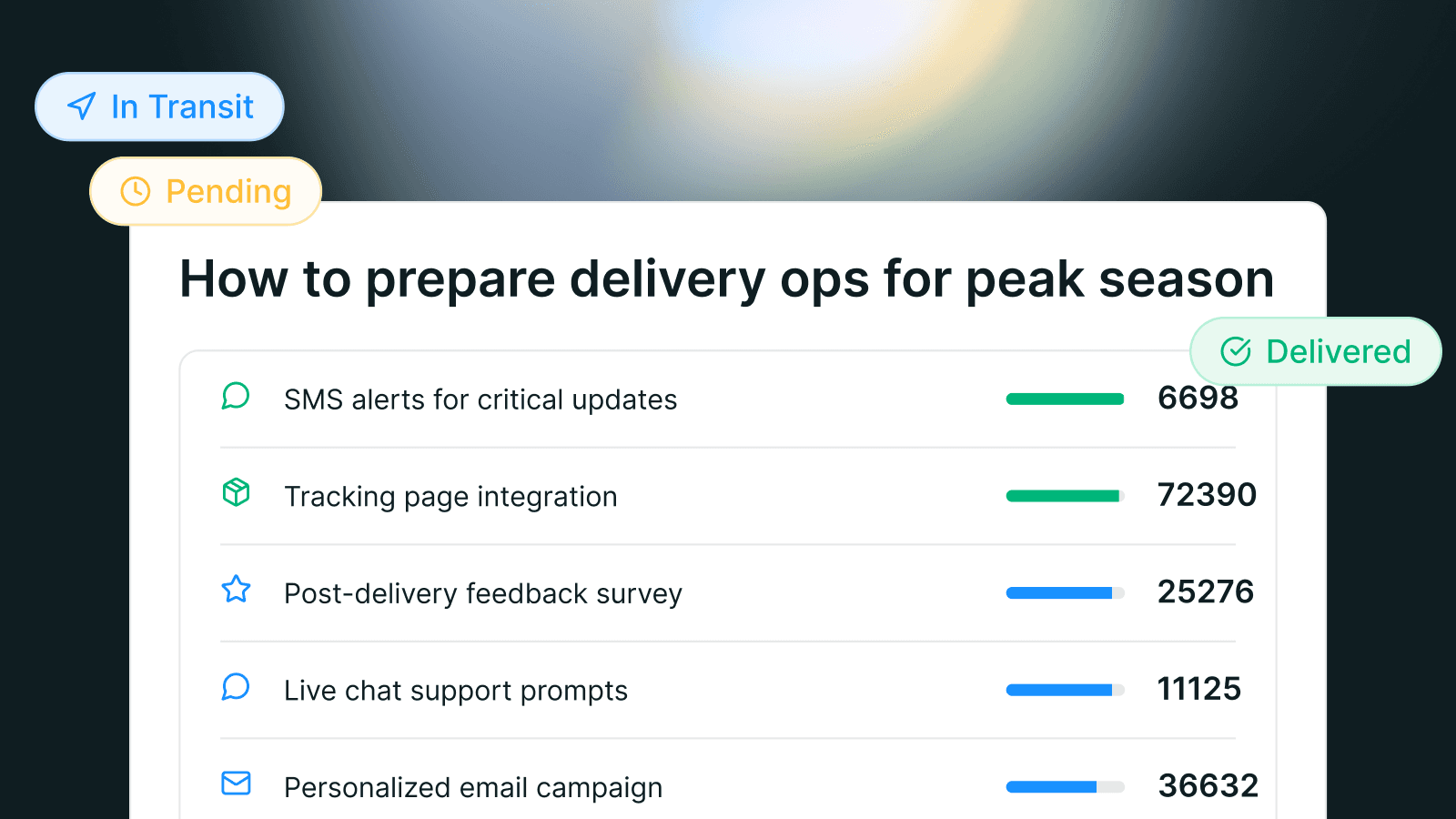
How to Prepare Delivery Ops for Peak Season
Peak season is the most unforgiving test of an ecommerce delivery operation. Volume spikes, carrier networks run at capacity, customer expectations are higher because purchases are often time-sensitive gifts, and the margin for error compresses at exactly the moment when the consequences of getting it wrong are greatest.
The brands that get through peak season without a significant delivery incident don't do it by reacting well. They do it by preparing early, communicating clearly, and building contingency into the plan before they need it.
Start earlier than feels necessary
The most common peak season mistake is starting preparation too late. By the time October arrives, carrier capacity allocations are largely set, and the leverage you have to negotiate volume commitments or service level guarantees has significantly reduced.
Carrier conversations about peak should happen in summer at the latest. Those conversations should cover: your projected volume by week across the peak period, the service levels you need to maintain, how the carrier plans to manage capacity increases, and what guarantees, if any, they're prepared to make about performance during the highest-volume weeks.
Carriers that are evasive about capacity planning or unwilling to commit to any performance guarantees during peak are telling you something important. The time to find out is in July, not November.
Forecast your volume properly
Peak season planning is only as good as the volume forecast underpinning it. An underestimate means you run out of carrier capacity or warehouse resource at the worst possible time. An overestimate means you've committed to volume tiers you don't hit, which can affect your commercial terms.
Build your forecast from multiple inputs: last year's peak performance by week, your year-on-year growth rate, any planned marketing activity or promotions that will drive volume spikes, and any new channels or markets you're operating in this year that weren't in the base last year.
Share the forecast with your carrier early and update it as you get closer to peak. A carrier that has your volume forecast can plan around it. One operating on guesswork cannot.
Warehouse and dispatch readiness
Carrier performance during peak gets the most attention, but warehouse and dispatch operations are equally important. A parcel that misses the carrier collection because it wasn't picked and packed in time is a late delivery regardless of what the carrier does.
Audit your warehouse capacity and staffing ahead of peak. At your projected peak daily volume, can you physically pick, pack, and dispatch all orders within your cutoff window? If not, what needs to change? Temporary staffing, extended hours, process changes, and additional packing stations are all options, but they need to be planned and resourced in advance, not improvised during the first week of November.
Inventory positioning matters too. Stock that isn't in the right location when demand hits creates fulfilment delays that no carrier relationship can compensate for. Work with your supply chain team to ensure your highest-velocity SKUs are accessible and fully stocked before peak begins.
Set honest customer expectations
Peak season is not the time to overcommit on delivery. The brands that suffer the most reputational damage during peak are typically the ones that maintained next-day promises they couldn't operationally support, not the ones that communicated adjusted timeframes clearly.
If your standard delivery window extends during peak, update your checkout messaging to reflect it. If next-day delivery has an earlier cutoff in December than it does in August, make that visible. If there are dates after which you cannot guarantee pre-Christmas delivery, communicate them prominently and early.
Customers who are given accurate expectations and have them met are significantly more satisfied than customers who are given optimistic expectations and have them missed. The temptation to maintain headline delivery promises during peak to protect conversion is understandable. The cost in complaints, reviews, and customer service contacts when those promises aren't met is usually higher than the conversion impact of honest messaging would have been.
Build contingency into the plan
Even well-prepared operations encounter unexpected problems during peak. A carrier depot going down, a weather event, a volume spike beyond forecast. The brands that handle these well have thought about contingency before they needed it.
At minimum, have a view on what you would do if your primary carrier couldn't fulfil a portion of your volume for 48 hours. That might mean a secondary carrier relationship maintained at low volume for exactly this purpose, or a pre-negotiated overflow arrangement. It might mean a communication plan for customers about delays. It might mean a decision framework for which orders get prioritised if you have to triage.
Contingency planning doesn't need to be elaborate. It needs to exist, and the people who would need to act on it need to know what it says before the situation arises.
Review while it's fresh
The most valuable input to next year's peak preparation is a structured review conducted immediately after this year's peak ends. What worked, what didn't, where did volume deviate from forecast, where did carrier performance fall short, what customer communications worked and which generated confusion.
Capture this while the detail is fresh. A peak review conducted in January from memory is significantly less useful than one conducted in the first week of December with data and notes from the people who lived it.
HIVED works with brands ahead of peak to align on volume forecasts, capacity planning, and service level expectations. If you want a carrier that plans with you rather than reacts to you, [get in touch.]

CAREERS
Shape the future of logistics
We are hiring across our business. Get in touch today to see if HIVED could be the right fit for you.

" height="18px" id="WXhVeA1oH" transform="translate(4.16 3)" width="15.680039999999998px"/></svg>)
" height="18px" id="B9Ck5Ljyr" transform="translate(3 3)" width="18px"/></svg>)
" height="18px" id="v2_jQqFYe" transform="translate(3 3)" width="18px"/></svg>)