The true cost of last-mile delivery
Last-mile delivery is the final leg of a parcel's journey, from a distribution hub to the customer's door. It is also the most expensive part of the supply chain, with last-mile now accounting for 53% of total shipping costs, up from 41% in 2018.

Yasmin Cohen
0
min read
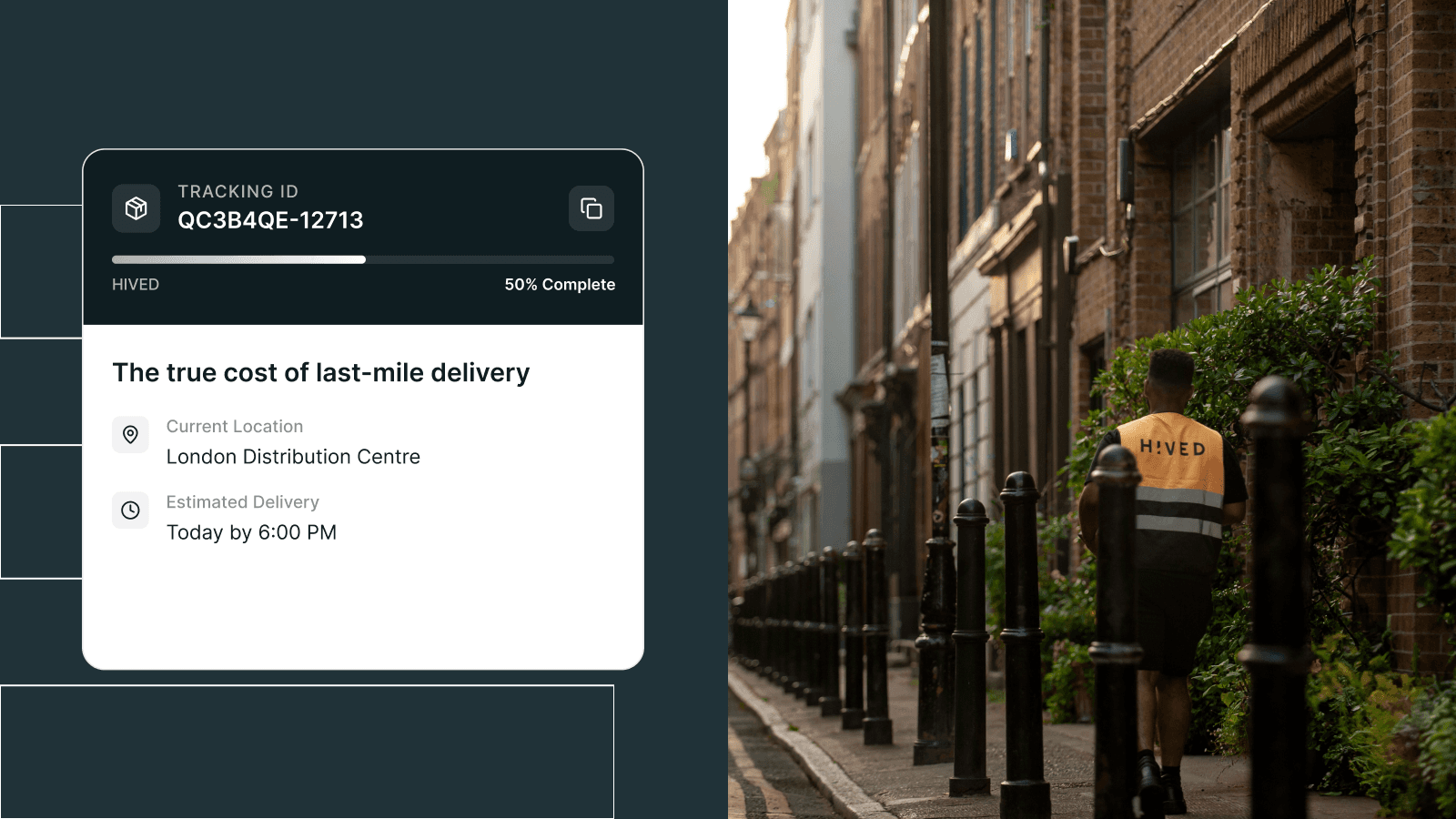
The true cost of last-mile delivery
Last-mile delivery is the final leg of a parcel's journey, from a distribution hub to the customer's door. It is also the most expensive part of the supply chain, with last-mile now accounting for 53% of total shipping costs, up from 41% in 2018.
But the true cost goes beyond that headline figure. Here is what you need to know.
Why last-mile delivery is so expensive
Last-mile delivery economics are inherently challenging. A single truck can deliver thousands of units to one location; a last-mile vehicle might make 100 individual stops a day, each requiring parking, walking, and a delivery attempt that may not succeed.
Urban routes are affected by congestion and parking restrictions. Rural routes can cover hundreds of kilometres for a handful of deliveries. Neither is cost-efficient, and those inefficiencies are passed on through your carrier rates.
Hidden costs
The carrier rate is the most visible last-mile cost, but it is far from the only one.
Failed first delivery attempts: Industry estimates suggest 5-10% of first attempts fail, triggering costly redeliveries that eat directly into your margins.
Customer service: Failed deliveries drive enquiries. A single "where is my order" query or call can cost £5-15, and they add up fast.
Returns from delivery failures: Damaged or lost parcels bring additional carrier fees, processing costs, and potential write-offs.
Lost customers: A poor delivery experience is one of the most common reasons customers do not return. Acquiring a replacement customer always costs more than keeping the original one.
The expectations problem
The biggest ecommerce players have significantly raised the bar on delivery expectations. Free next-day or two-day shipping is now standard for a large proportion of online shoppers, and smaller retailers feel real pressure to keep up.
84% of ecommerce businesses experienced last-mile cost increases in the past year, with 50% expecting those costs to double again. That means choosing between absorbing higher carrier costs to offer faster delivery, building those costs into your pricing, or being transparent with customers about timelines. There is no single right answer. The right balance depends on your margins, your customers, and your market position.
Practical ways to reduce last-mile costs
You cannot eliminate last-mile costs, but you can manage them more effectively.
Consider your courier carefully. Consider your courier carefully. Not all carriers perform equally across all areas. HIVED solves this for many ecommerce brands by operating a purpose-built electric urban network designed for consistently high first-attempt success rates and reliable delivery performance.
Consider an all-in-one solution. Managing multiple carrier contracts and platforms adds operational complexity and hidden costs. HIVED One, our all-in-one delivery solution, replaces fragmented setups with a single daily collection, one platform, and full UK coverage, reducing the time and resources spent on logistics management.
Offer delivery window options. Letting customers choose a preferred date or time increases first-attempt success rates and reduces redelivery costs.
Validate addresses at checkout. Catching errors before a parcel ships prevents correction fees and failed deliveries further down the line.
The bigger picture
Last-mile delivery is often treated as a cost to be minimised, yet managing last-mile costs and getting the experience right effectively protects your margins, builds trust, and turns every delivery into a competitive advantage.
Understand you can reduce delivery costs without compromising performance 👉 [Ship with HIVED]


CAREERS
Shape the future of logistics
We are hiring across our business. Get in touch today to see if HIVED could be the right fit for you.

" height="18px" id="WXhVeA1oH" transform="translate(4.16 3)" width="15.680039999999998px"/></svg>)
" height="18px" id="B9Ck5Ljyr" transform="translate(3 3)" width="18px"/></svg>)
" height="18px" id="v2_jQqFYe" transform="translate(3 3)" width="18px"/></svg>)