Backstage
Delivery is no longer a cost centre - it’s a competitive advantage
When companies optimise logistics purely for cost, they often create friction elsewhere. The alternative is to treat delivery as a value centre and a revenue opportunity, which leads to greater returns across a business. Here's how we do it at HIVED.

Mathias Krieger
·
4 min read
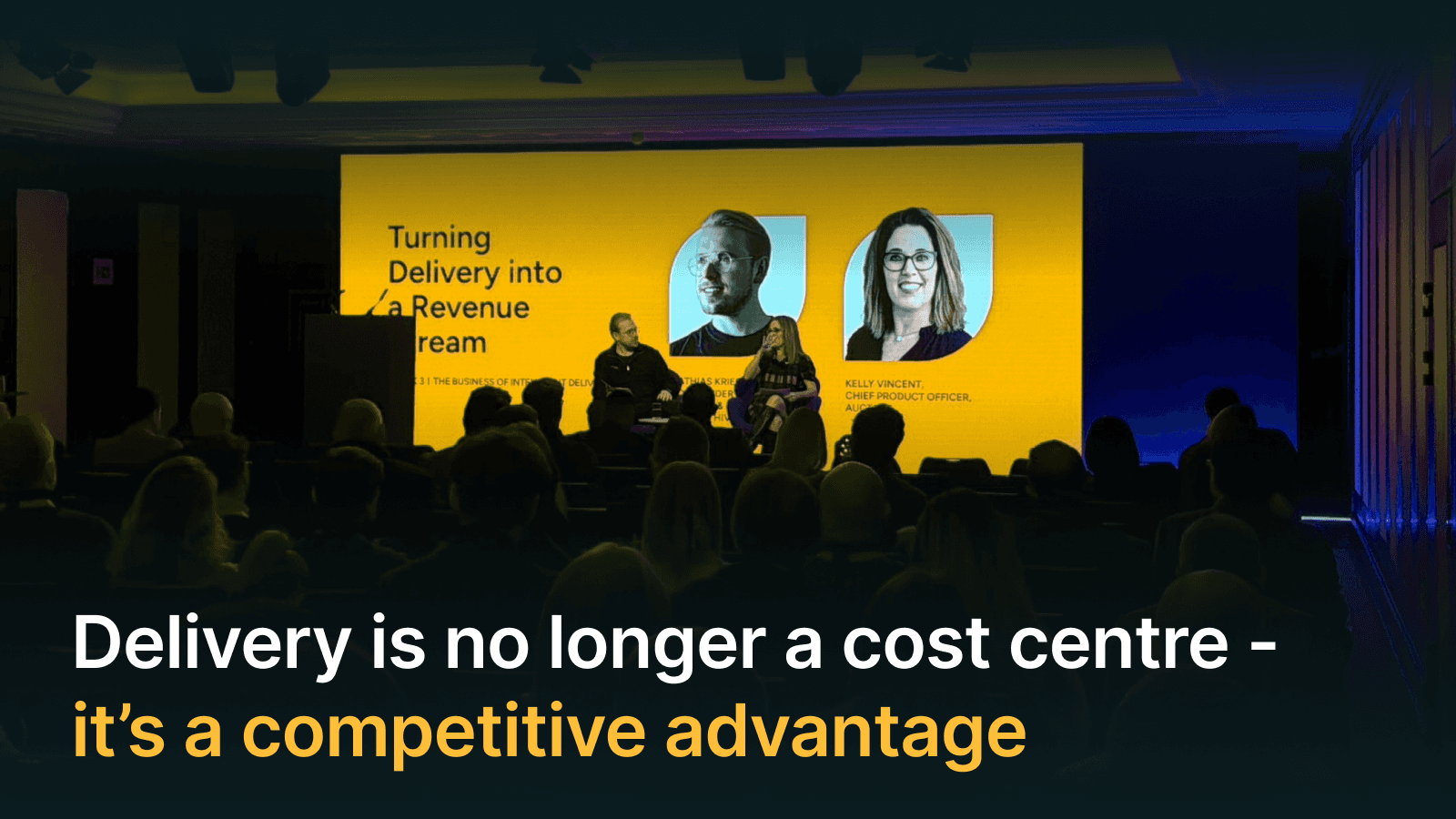
In recent decades, parcel delivery has been treated as a background function. Something operational to optimise for cost, something customers barely noticed unless it went wrong.
That world no longer exists.
Over the past 10 to 15 years, ecommerce has turned delivery into one of the most critical parts of the customer journey. Today, delivery is a defining moment that shapes trust, loyalty, and long-term growth.
How consumer expectations have changed
Online banking, food delivery and ride-hailing services have all raised expectations around convenience, transparency, and control. Consumers now expect to know exactly what is happening, when it will happen, and what their options are if something changes.
Interestingly, what matters most is not speed alone.
For most consumers, trust and certainty outweigh pure speed. The market largely expects next-day delivery as the standard, but what customers really care about is knowing when their parcel will arrive and trusting that the information they are given is accurate.
The takeaway: a predictable delivery experience will outperform a faster but uncertain one.
From cost centre to value centre
In traditional retail, logistics was viewed as a cost to be minimised. In ecommerce, that mindset is actively harmful.
Delivery is the largest part of the post-purchase experience. It often accounts for around 80% of the physical customer journey. Treating it purely as a cost centre ignores its impact on retention, lifetime, value and brand perception.
When companies optimise logistics purely for cost, they often create friction elsewhere. Higher contact volumes, lower trust, more churn and weaker customer relationships.
The alternative is to treat delivery as a value centre and a revenue opportunity, which leads to greater returns across a business.
Using delivery to drive growth
Delivery can generate value when it is designed around customer outcomes, not just operational efficiency. That means:
Retaining customers through reliable, consistent experiences
Customising delivery options based on customer needs and value
Building trust that increases repeat purchase and lifetime value
Pricing is a powerful lever here. Not all customers need or deserve the same delivery options. Loyal customers may be rewarded with free or premium delivery. Serial returners may be charged differently to drive healthier behaviours.
This kind of segmentation does not require perfect systems on day one. Even simple approaches identifying customer types can unlock meaningful value.
Why data and collaboration matter
To improve delivery experiences, companies need end-to-end visibility at the individual customer level. Data and reporting should focus on the actual delivery experience, not just aggregate cost metrics.
Equally important is collaboration. When retailer customer service teams and carriers operate in silos, the customer experience suffers. Conflicting messages, unclear ownership and broken handovers erode trust quickly.
The best delivery experiences come from tight alignment between retail, logistics, CX, marketing and finance. Technology plays a critical role in bridging these silos and enabling teams to work towards shared outcomes.
Technology should support trust, not replace it
Post-purchase technology can be incredibly powerful. Custom tracking pages can become service portals, allowing customers to manage deliveries, returns and exchanges in one place.
But none of this works if the physical delivery experience is unreliable. If the parcel does not arrive as promised, no amount of beautifully designed tracking or notifications will rebuild trust.
The physical experience underpins the digital one. This is why strong logistics fundamentals matter.
Starting simple, building smart
Companies do not need Amazon-level systems to improve delivery experiences. What matters is doing the basics well. That looks like:
Clear ownership
Reliable delivery
Honest communication
Actionable data
A strong logistics partner should enable this, not block it, providing the data, flexibility, and operational support needed to implement smart policies and improve customer outcomes over time.
When things go wrong, the recovery matters
Mistakes in delivery are inevitable. Parcels get delayed, addresses are wrong, things do not always go to plan.
The opportunity lies in how brands respond. Transparent, proactive communication builds trust. Informing customers early, explaining what has happened, and offering clear alternatives or solutions can turn a negative moment into a positive one. In many cases, the recovery experience matters more than the failure itself.
This is where delivery becomes a differentiator.
Building a modern parcel logistics network
At HIVED, we have built an end-to-end, full-stack, technology-driven parcel logistics network that serves customers from warehouse to end recipient in a genuinely customer-centric way.
Our approach is grounded in four core tenets:
True service reliability
Customer satisfaction for the end recipient
A positive, technology-forward brand experience
Sustainability, powered by a 100% electric logistics network
These principles are not abstract values. They are practical requirements for operating in a world where delivery is a front-line experience, not a back-office function.
The takeaway
Delivery is no longer just about moving parcels from A to B. It is about trust, certainty and experience, and how brands show up after checkout.
And increasingly, it is about growth.
Companies that rethink logistics as a strategic, customer-facing function will not only reduce friction. They will build stronger relationships, retain more customers and create lasting competitive advantage.




" height="18px" id="WXhVeA1oH" transform="translate(4.16 3)" width="15.680039999999998px"/></svg>)
" height="18px" id="B9Ck5Ljyr" transform="translate(3 3)" width="18px"/></svg>)
" height="18px" id="v2_jQqFYe" transform="translate(3 3)" width="18px"/></svg>)